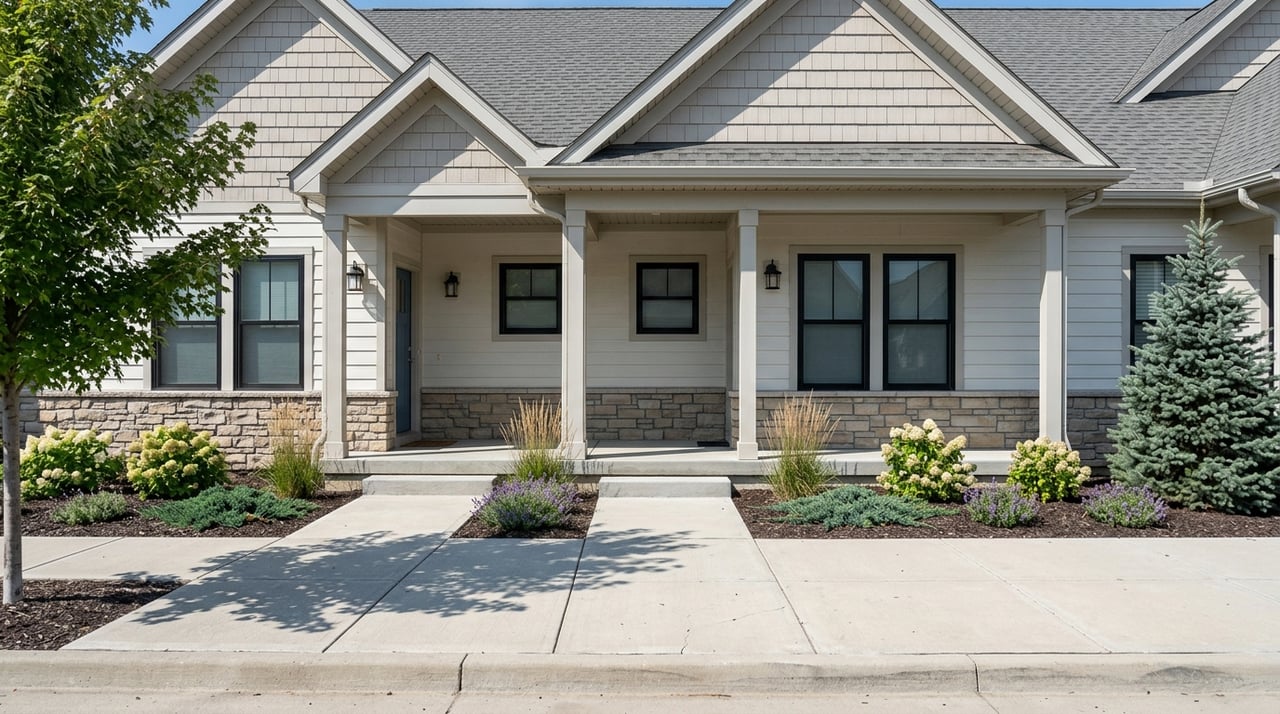
You do not have to buy a detached house to become a homeowner in Loveland. If you are comparing a townhome or condo, you are probably weighing price, maintenance, and monthly costs all at once. The good news is that Loveland gives you real attached-home options, and the current market may give you a little more time to review the details carefully. Let’s dive in.
Why buyers consider attached homes
For many buyers, the biggest reason to look at a townhome or condo in Loveland is affordability. The March 2026 Loveland market update shows a year-to-date median sales price of $399,900 for townhouse and condo properties, compared with $520,000 for single-family homes. That is a difference of $120,100, or about 23.1%.
That price gap can open the door for first-time buyers, downsizers, and anyone who wants a lower purchase price than a detached home may offer. It can also make it easier to prioritize location, layout, or lower exterior upkeep without stretching as far on price.
Loveland price ranges today
Current listing data shows a wide range of attached-home options in Loveland. Condos have a median listing price around $350,000, while townhomes are closer to $438,000. In practice, that means you may see condos from about $230,000 to $485,000 and townhomes from roughly $324,900 to $499,000 or more.
Those ranges matter because “attached home” is not one single category. A smaller main-floor condo and a larger townhome with a garage, basement, or community amenities can feel very different in both lifestyle and monthly cost.
What the market means for you
Loveland’s townhouse and condo segment looks a bit softer than last year. The March 2026 local market update shows median sales price down 4.9% year to date, and days on market up to 114 year to date. That does not guarantee negotiating leverage, but it can give you more time to compare options and study the fine print.
That extra time can be valuable. Instead of rushing, you may be able to review HOA dues, reserve planning, insurance responsibilities, and the overall condition of the community before you write an offer.
Condos in Loveland
Loveland condos often come in practical, efficient layouts. Many current examples are around 2 bedrooms, 2 bathrooms, and roughly 981 to 1,280 square feet. Features can include covered balconies, walk-in closets, and sometimes a garage.
You may also find loft-style or two-story condos. Current examples include a 1-bedroom, 2-bath layout with an attached two-car garage and an upper-level primary suite, along with larger condo options that offer a loft, unfinished basement, and more than 2,000 square feet.
Some condo listings are also marketed around convenience. Depending on the location, you may be near shopping, dining, parks, medical facilities, or commuter routes. If ease of day-to-day living matters to you, that can be part of the value.
Townhomes in Loveland
Townhomes in Loveland often offer a little more separation and a more house-like feel. Current listings commonly show 2 to 3 bedrooms, 2 to 3.5 bathrooms, and many fall in the 1,200 to 1,600 square foot range. Larger units can push above 2,000 square feet.
Features often include attached garages, finished basements, fenced patios, or front porches. Some communities also include amenities like trails, dog parks, pools, or clubhouses, which can add convenience but also affect your HOA dues.
Why labels can be misleading
One of the most important things to understand is that the listing label does not always tell the full story. In Loveland, you may see terms like “townhome style condo,” which can sound clear but may not reflect the legal ownership structure.
In Colorado, the recorded declaration controls whether a property is legally a condominium or a planned community. The exterior design alone is not enough. That distinction matters because it can affect what you own directly, what the HOA maintains, and which costs you may be responsible for later.
What you own matters
Under Colorado’s Common Interest Ownership Act, a condominium is a common interest community where you own your unit plus an undivided interest in the common elements. A planned community is a common interest community that is not a condominium or cooperative. In simple terms, the governing documents determine ownership and maintenance responsibility.
That is why buyers should go beyond the photos and floor plan. Two attached homes may look similar online, but the financial and maintenance obligations can be very different once you read the declaration and community documents.
Understanding HOA costs
Monthly HOA dues are one of the biggest factors in buying a condo or townhome. Some Loveland listings show condo HOA dues in the $250 to $360 range on sample properties, while other communities may include a broader set of services that change the value of that fee.
For example, one current townhome listing says the HOA covers internet, trash, snow removal, and exterior maintenance, while gas, water, and electric remain separate utility bills in that case. That is why the fee amount alone does not tell you enough. You need to know exactly what is included and what you still pay on your own.
What to review before you offer
Colorado’s HOA Center advises buyers to obtain the declaration, sometimes called the CC&Rs, from the county clerk and recorder even before signing a contract. The declaration can show common elements, the plat map, how votes are allocated, how assessments are determined, and what restrictions apply to the unit.
DORA also recommends checking for signs of deferred maintenance, asking about lawsuits and dues increases, confirming whether the HOA is registered, and asking your lender how it handles HOA questionnaires. If a community shows deferred maintenance, it may be a sign that a special assessment could be discussed later.
Limited common elements explained
Another detail buyers often miss is the difference between general common elements and limited common elements. Under Colorado law, a limited common element is reserved for the exclusive use of one or more, but fewer than all, units.
That matters because certain repair or replacement costs for those items may be assessed only to the unit or units that benefit from them. In real life, that can affect who pays for items tied to a balcony, patio, or other exclusive-use area. It is worth asking for clarity before you move forward.
Insurance and reserve planning
Colorado law also treats shared community costs seriously. Common expenses can include reserves, and for post-1992 communities, the HOA must carry property insurance on common elements and commercial general liability insurance.
For you as a buyer, that means reserve strength and insurance are not side issues. They are part of understanding the long-term health of the community and your exposure to future costs.
Lifestyle fit in Loveland
A condo or townhome can be a strong fit if you want less exterior maintenance or a lower purchase price than a detached home. That can appeal to first-time buyers, buyers who travel often, and downsizers who want simpler day-to-day upkeep.
Still, it helps to look closely at the exact location. Loveland has a Walk Score of 30, which means it is considered minimally walkable overall. If being close to errands or amenities on foot is important to you, focus on the specific building and surrounding area rather than assuming the property type will deliver that on its own.
Financing questions to ask early
If you plan to use financing, ask loan-related condo or HOA questions early in the process. The research for this market shows that loan program eligibility can depend on project status, and lenders may need HOA questionnaires to move forward.
That makes timing important. A community that looks perfect at first glance may still require extra review from your lender, so it helps to confirm those details before you get too far down the road.
Smart questions for buyers
When you tour a Loveland condo or townhome, bring a short list of practical questions with you:
- What does the monthly HOA fee cover?
- Which utilities or services are billed separately?
- How often have dues increased?
- Are any special assessments planned or being discussed?
- Is there a recent budget or reserve plan for major repairs?
- Who handles roofs, siding, balconies, windows, landscaping, snow removal, and common-area insurance?
- Are there restrictions on rentals, pets, parking, or exterior changes?
- Can the lender get an HOA questionnaire quickly?
- What do the recorded documents say the property actually is?
These questions can help you compare two similar-looking homes in a much smarter way. In attached housing, the monthly payment is only part of the picture.
Final thoughts on Loveland condos and townhomes
Buying a townhome or condo in Loveland can be a smart move if you want a lower entry price, simpler exterior maintenance, or a layout that better fits your stage of life. The key is to look past the photos and ask careful questions about ownership structure, HOA coverage, reserves, and future costs.
With attached homes, the details matter. If you want help comparing Loveland condos and townhomes, reviewing the tradeoffs, and making sense of the local market, Brendan Mahoney can help you move forward with clear, practical guidance.
FAQs
What is the price difference between condos, townhomes, and single-family homes in Loveland?
- The March 2026 Loveland market update shows a year-to-date median sales price of $399,900 for townhouse and condo properties versus $520,000 for single-family homes, a difference of $120,100.
What is a typical condo price range in Loveland?
- Current listing data shows Loveland condos with a median listing price around $350,000, with sample listings ranging from about $230,000 to $485,000.
What is a typical townhome price range in Loveland?
- Current listing data shows Loveland townhomes with a median listing price around $438,000, with examples starting around $324,900 and reaching $499,000 or more.
What should you review before buying a condo or townhome in Loveland?
- You should review the declaration or CC&Rs, HOA dues and what they cover, dues increase history, reserve planning, signs of deferred maintenance, possible special assessments, and maintenance responsibility for shared and limited common elements.
Why does the condo versus townhome label matter in Colorado?
- In Colorado, the recorded declaration determines whether the property is legally a condominium or a planned community, and that can affect ownership rights, maintenance duties, and who pays certain costs.
Are Loveland condos and townhomes in a fast-moving market right now?
- The attached-home segment appears somewhat slower than last year, with townhouse and condo days on market at 114 year to date in the March 2026 Loveland market update, which may give buyers more time for due diligence.